Rara in Haiti
advertisement
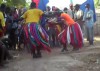
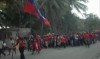
The blend of religion and public celebration is brought out in a meticulous fashion. The festival kicks off at the beginning of the Lent season and continues on every weekend thereafter before culminating in a beautiful ceremony during the Easter festivities. The excitement it elicits in the participants is usually palpable and manifests in the vigor with which they sing, dance and play the traditional musical instruments. The Rara festival starts in the rural areas and proceeds to bigger towns. Along the way thousands of people join in the revel. It has no room for somberness. Brightly dressed Haitians enjoy themselves with some degree of wildness.
Though predominantly Afro-based, Taino Amerindian elements have been incorporated. The songs ordinarily celebrate the African roots of the majority of Haitian people. It is not just about merry making. It is a perfect chance for the inhabitants to voice their concerns about politics, oppression, poverty, other social issues and most importantly, religion. Vodou worshippers incorporate their rituals into the carnival. As the March progresses, they pause along all religious spots to pay tribute to their ancestors.
Cylindrical bamboo trumpets called vaksen, percussion instruments named guiros, maracas, kongo or petro drums, metallic bells and whistles are vital to the processions. They Vaksen are often struck with sticks in unison to produce fine tuned entertaining sounds. With time, modern trumpets and saxophones are finding their way into the carnival.
The organization observed in these proceedings is admirable. As the festival comes to a close in the respective cities, many awards are given for the songs that stole the show. Well set out rules are followed strictly as regards the place, the time and the manner of dancing. Numerous bands eventually perform together, with each band doing its level best to please the crowd. Competition becomes real as the different groups attempt to outshine each other. The climax and the end of the festival is marked by a traditional dance and a salute led by a lead male dancer.
Rara has a long history. It is believed that it started in the colonial times when enslaved Afro-Creoles and Africans in Saint Domingue took to the streets armed with drums and other instruments during Easter Sunday. Due to the strong political message that is usually passed during this time, some bands and individuals have been barred from taking part. A good example is Mano Charlemagne, the folksinger who was forced into exile for involving himself politically during the celebrations.