Haiti Carnival the biggest streets party in the country
advertisement
Haitian Carnival period is a time when the separation of classes in the Haitian society is less visible. Despite the myth of the disappearance of classes, the bourgeoisie, middle class and poor Haitians have the same opportunities to have fun and enjoy themselves.
Carnival in Haiti has a very strong political dimension. Although many of the songs are about sex, community's scandals, gossip and mockery of famous people and political personalities which cannot be said openly are all included in Carnival songs.
One popular song in Haiti was created as a result of marital problems by a U.S. commander during the 1915 U.S. occupation of Haiti. "Anjeliko, Anjeliko, ale kay manman ou", meaning "Angelica, Angelica, go on back to your mother's house" was created during a carnival season in Haiti because the U.S. commander's wife did not know how to wash and iron.
In the 1950's and 60's, we say the introduction of "Carnaval Des Etudiants." The students started participating with their floats, their musical bands, and their pageants. No one was allowed in the celebration without a uniform.
In 1967, we say the first Haitian musical band in the Carnival, Webert Sicot. Two years later, in 1969, Nemours participated for the first time in the carnival with his band. Soon after, mini bands like Les Gypsies, Les Difficiles, Sheu-Shleu, Les Ambassadeurs, and others started participating.
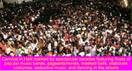
Today, Haitian Carnival involves rivalry between major musical bands such as T-Vice, Djakout Number one, King Passy, Krezy and others. Carnival is also a time when you see big businesses advertising and sponsoring stands or floats